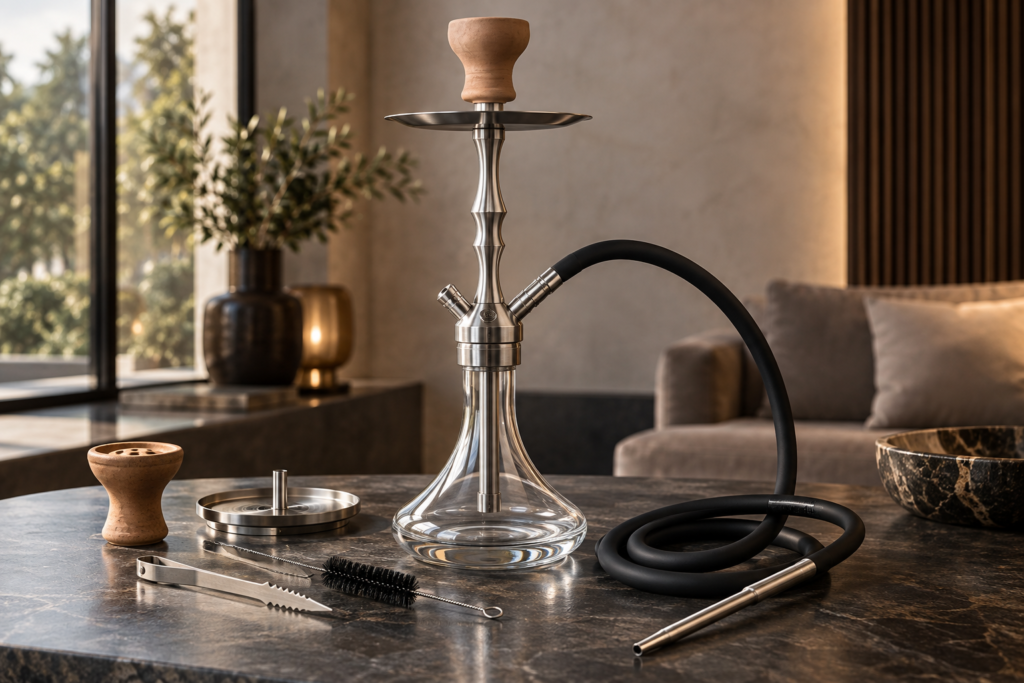
The growing interest in shisha UK products has given buyers access to a wider selection of designs, materials and sizes than ever before. While appearance often attracts the most attention, construction quality has a much greater influence on how the equipment performs and how easy it is to maintain. A well-made shisha set should include compatible components that fit together securely and can be cleaned without unnecessary difficulty. Buyers should also consider where and how often the equipment will be used before choosing a model. Whether selecting a compact option for occasional home use or a larger hookah pipe for regular social gatherings, understanding the main components can make the decision considerably easier.
Start with the Main Materials
The stem is one of the most important parts of the equipment because it connects the bowl, tray, hose and base. Stainless steel is a popular choice due to its strength, resistance to corrosion and clean appearance. It is generally suitable for regular use and can withstand repeated washing when cared for correctly.
Other metals may also be used, but buyers should examine the finish and overall build carefully. Poorly coated surfaces can deteriorate over time, particularly when exposed to moisture. Decorative details can add visual interest, although they should not make the equipment difficult to clean or conceal areas where residue may collect.
The base is usually made from glass and should feel stable when placed on a flat surface. Thicker glass can offer a more substantial feel, but thickness alone does not guarantee quality. Buyers should inspect the base for visible cracks, uneven edges or imperfections around the opening.
Check the Connections and Seals
An airtight system is essential for consistent airflow. If connections are loose, air may enter around the stem, hose or bowl rather than passing through the intended route. This can lead to weak performance and make the equipment frustrating to use.
Traditional systems often use rubber or silicone grommets to seal the main components. These parts should fit firmly without requiring excessive pressure. Modern designs may use screw fittings, locking mechanisms or ground-glass connections instead.
No single connection style is suitable for every buyer. Screw fittings can feel secure and straightforward, while grommet-based systems may make it easier to replace individual parts. Ground-glass connections create a clean finish but usually require more careful handling to avoid chips or damage.
Before purchasing, it is worth checking whether replacement seals and compatible accessories are readily available. Small components eventually wear out, and access to suitable replacements can extend the useful life of the equipment.
Consider the Bowl and Heat Setup
Bowls are available in different materials, shapes and capacities. Traditional clay remains common because it handles heat effectively, although ceramic and other materials are also available. The shape of the bowl influences how its contents are packed and how heat is distributed during a session.
Some buyers prefer a classic bowl with holes through the base, while others choose a phunnel-style design with a raised central opening. The latter can help retain moisture within the bowl, but suitability depends on the material being used and the preferred preparation method.
Heat can be managed with foil or a dedicated heat-management device. Both approaches require careful attention. Excessive heat can create an unpleasant experience, while insufficient heat may result in poor performance. Any charcoal used should be handled with proper tools on a stable, heat-resistant surface in a well-ventilated setting.
Choose the Right Size
A larger model is not automatically better. Height can affect appearance and stability, but the internal diameter, chamber design and quality of the seals are often more important to performance.
Compact models are easier to store and transport, making them practical for homes with limited space. Larger options can create a stronger visual centrepiece and may have broader bases, but they require more storage room and careful handling.
The number of hose ports should also be considered. A single-hose design is usually simple to manage and maintain. Multiple ports may suit social use, although they introduce additional seals and components that need regular cleaning.
Buyers should measure the intended storage area and consider whether the equipment will remain assembled between uses. A tall design may look impressive but become inconvenient if it must be dismantled whenever it is stored.
Look for a Washable Hose
The hose has a direct effect on airflow and cleanliness. Modern silicone hoses are widely used because they are flexible, washable and resistant to flavour retention. Traditional fabric-covered hoses can have decorative appeal, but not all are designed to be rinsed internally.
A washable hose should be cleaned regularly and allowed to dry fully before storage. Moisture left inside can create unpleasant odours and reduce the lifespan of the component. Removable mouthpieces and handles can make cleaning easier, particularly when the equipment is shared among adults.
Hose length matters as well. A longer hose provides greater freedom of movement, but it should not be so long that it becomes awkward or easily pulled from the base.
Make Cleaning Part of the Decision
Equipment that is difficult to clean is less likely to receive proper maintenance. The stem should be accessible with an appropriately sized brush, while the glass base should have an opening large enough for rinsing and cleaning.
After each use, the bowl should be emptied once it has cooled, and the main components should be rinsed according to the manufacturer’s instructions. Residue should not be allowed to build up inside the stem or base. Regular cleaning helps preserve airflow and prevents old flavours from affecting later sessions.
Components must be completely dry before being reassembled or stored. Glass should also be protected from sudden temperature changes, as thermal shock can cause cracking.
Focus on Quality and Responsible Use
A good purchase balances construction, compatibility, maintenance and appearance. Decorative finishes and elaborate shapes can enhance the design, but they should not distract from secure connections, stable construction and accessible replacement parts.
Shisha smoking is intended for adults and carries serious health risks, including exposure to nicotine, carbon monoxide and other harmful substances. Equipment should be used responsibly, kept away from children and never treated as a risk-free alternative to other forms of smoking.
By assessing materials, seals, bowl design, size and cleaning requirements before buying, an adult purchaser can choose equipment that is practical to maintain and suited to its intended setting.